
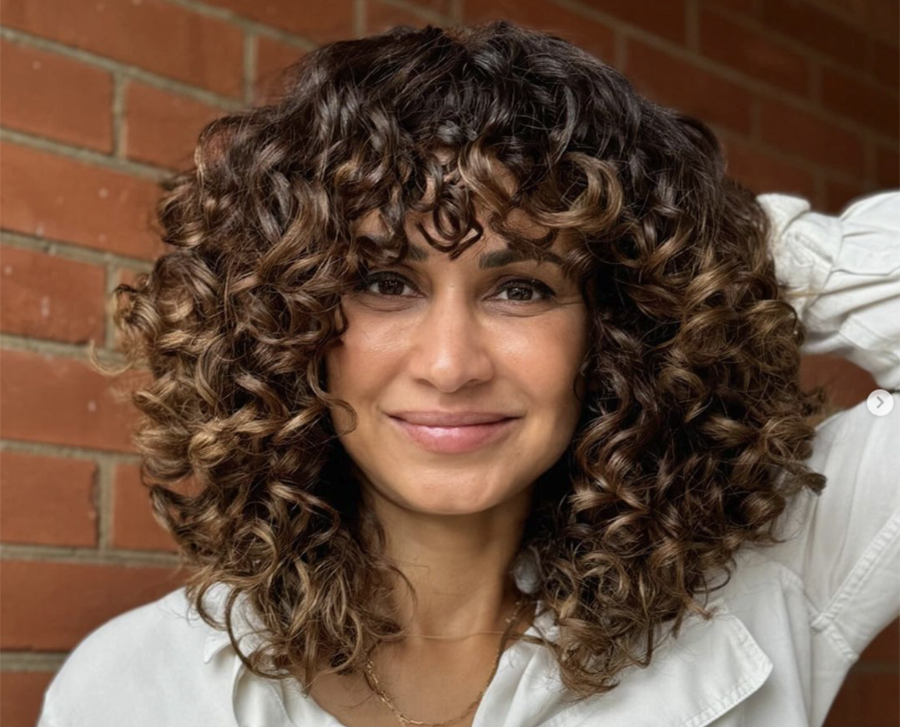
Choosing a stylist who knows how to cut curly hair can be a gamechanger.
Curly hair isn’t just a texture — it’s a full personality. It has opinions, moods, and an occasionally dramatic relationship with humidity. One day it behaves like a dream; the next, it’s staging a rebellion. And while social media may promise that one miraculous cream will fix it all, curls don’t follow shortcuts. They follow science, structure, and their own whims. Which is why the right stylist — one who truly understands curls — is a gamechanger.
And understanding curls starts with understanding how they’re built. Each twist along the strand creates delicate points that lose moisture quickly and invite frizz just as fast. Porosity tends to run higher, shrinkage disguises true length, and the curl pattern you see when hair is soaking wet rarely reflects the shape it will take once dry. Traditional wet-cutting methods smooth the hair into submission, erasing the nuances that make curls behave the way they do.
This is exactly why working with a stylist who specializes in curls is transformative.
Curl specialists don’t treat hair as raw material; they treat it as sculpture. They assess curls in their natural, dry state. They watch how the pattern moves, how each curl clumps, how much it shrinks, where it lifts, and where it lies flat. And perhaps more importantly: they know that no two curls — even on the same head — behave alike.

Kaycee Clark specializes in cutting curly hair.
Curl specialists also understand the full spectrum of curl types.
A loose 2C wave behaves nothing like a tight 4C coil, and most people have more than one pattern on their head. A curl-trained stylist knows how to blend these differences seamlessly, create shape without sacrificing length, and build volume that looks purposeful, not accidental. They also know the real-world stuff curly hair clients deal with: frizz, lack of consistency, product overwhelm, curl clumping, and the fine art of a day-two or day-three refresh.
Equally important is having a command of product strategy, not just product categories. They know when a mousse is better than a cream (finer curls that need grip), when a rich leave-in should be applied soaking wet (tighter textures that crave moisture), and when gels are necessary to lock in definition. Plus, a specialist will teach clients how to apply product — scrunching, pulsing, glazing, clumping — rather than simply handing them a tube and wishing them luck. And they know when heat tools help, and when they hurt. A good diffuser routine can coax curls to their fullest potential; the wrong airflow can turn them into a frizz halo.
A quick consult is your best test drive.
Ask how they cut curls dry, how they evaluate porosity and pattern, and how they adapt product routines for different textures. The right stylist won’t hesitate — they’ll talk you through every step.
But above all, a curl specialist gives you something product alone never will: confidence. When curls are cut and styled correctly, they frame the face beautifully, hold their shape for days, and require far less manipulation. The right cut honors your natural pattern instead of fighting it.
And that’s the real magic: curls don’t have to be “managed.” With the right specialist, they can finally be celebrated.