
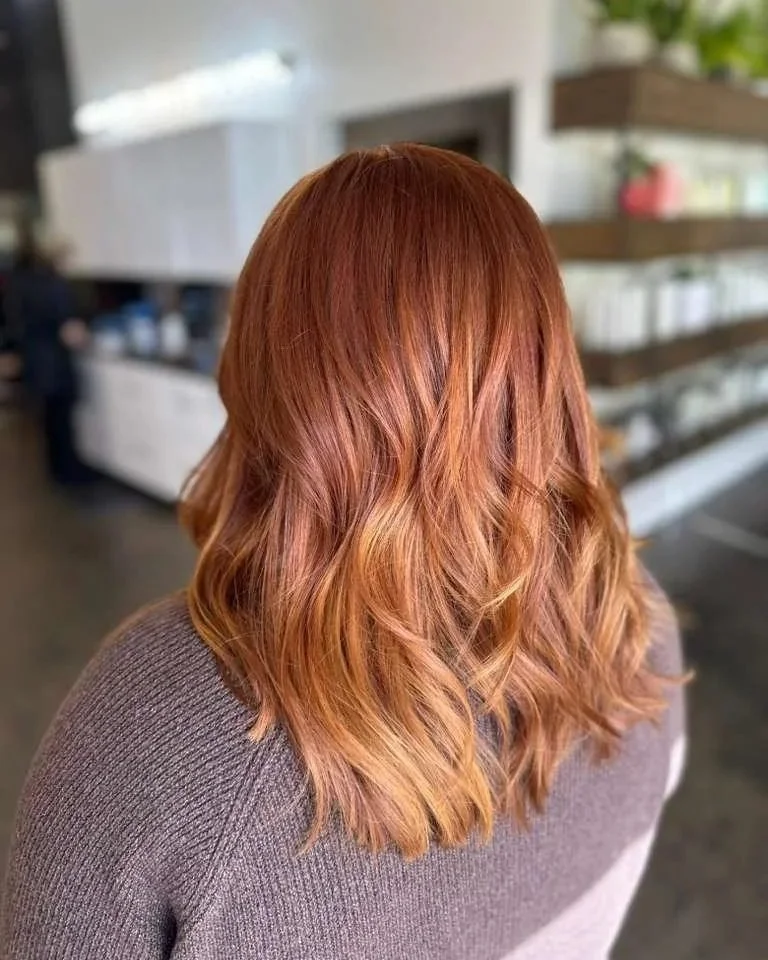
Copper red color by Laura Pendergraft Granberry, a stylist at Clark & Company Salon
On our color menu, gloss and toner share a single line: "Gloss & toner." Two of our stylists price them as one service. That isn't sloppy labeling. The two overlap more than most guides admit, because the same kind of demi-permanent color can do both jobs. What separates them is the reason you're booking.
A toner corrects the tone that lightening leaves behind. A gloss adds shine and refreshes or shifts the tone of color you already like. Below: what each one can and can't do, how long it lasts, and what our stylists charge, with every price checked on their own pages in November 2026.
Clark & Company Salon publishes this guide.
Quick answer: gloss or toner?
Book a toner if your hair was just lightened (highlights, balayage, a bleach retouch) and it looks yellow, orange or brassy. It's usually done in the same appointment as the lightening.
Book a gloss if your color is the shade you want but looks dull, if the tone has drifted since your last appointment, or if you simply want more shine.
Book a tint if you want gray covered or a new base color. Neither a gloss nor a toner is the service for lightening hair.
At Clark & Company, published starting prices for toner or gloss run from $20 to $70, depending on the stylist. For how long a gloss lasts, the published figures (one manufacturer's glaze, one Dallas salon's service) fall between about four and eight weeks.
Where gloss and toner overlap, and where they don't
Behind the Chair, the professional hair education site, says the terms are "often used interchangeably—but they're not the same thing." The simplest way to keep them apart: toner describes a job, gloss describes a service.
Behind the Chair defines a toner as "a professional color product used to refine or neutralize unwanted tones (think brassiness, warmth or dullness) after lightening or color services," and notes that toners come in permanent, demi-permanent and semi-permanent formulas.
A gloss is usually an all-over, demi-permanent service built around shine. Our menu describes ours as "an all-over demi color conditioner to adjust tone, add shine and refresh color between full appointments." Rossi Park, another Design District salon, says its gloss "reduces dull and brassy tones."
So a demi-permanent gloss can tone, and that's the overlap. It doesn't fully run the other way: a toner can also be a permanent formula, which is not what a between-appointment gloss is.
| Gloss | Toner | Tint (single process) | |
|---|---|---|---|
| Main job | Shine, plus a sheer refresh or shift of tone | Neutralizing brassy, yellow or dull tones after lightening | All-over color, including gray coverage |
| When it's booked | Between color appointments, or after color | Usually in the same visit as the lightening | Its own appointment |
| Lightens hair? | No. Glazes such as Wella's Shinefinity are sold as "zero lift" | Not its job: the lightener lifts, the toner refines | Depends on the formula |
| Starting price at Clark & Company | Gloss/toner $50+ to $70+ | Toner $20+ to $65+ | Tint $95+ to $140+ |
What a gloss can and can't do
The shine is real, but it's a surface effect. Wella says its Shinefinity glaze starts slightly alkaline and settles into an acidic range during processing, which it credits with smoothing the cuticle for "healthy-looking shine." Note the word "looking." A gloss won't repair heat or bleach damage. If frizz is the actual problem, a smoothing treatment is a different appointment.
A gloss won't make you lighter, either. Brighter blonde or more dimension means balayage or highlights, usually finished with a toner.
Gray is where expectations go wrong most often. Wella positions its glaze for the "first signs of gray," and even its stronger alkaline demi color, Color Touch, at "up to 50% gray coverage." Those figures are for Wella's products, not every gloss, so ask your colorist what to expect from theirs. For full coverage, the service is tint, which our hair color page lists as single-process color "including grey coverage."
A gloss is also an easy first step if you've never colored your hair. Wella suggests trying its glaze on hair that has never been colored. You get shine and a sheer tone without lightening anything.
What a toner does after lightening
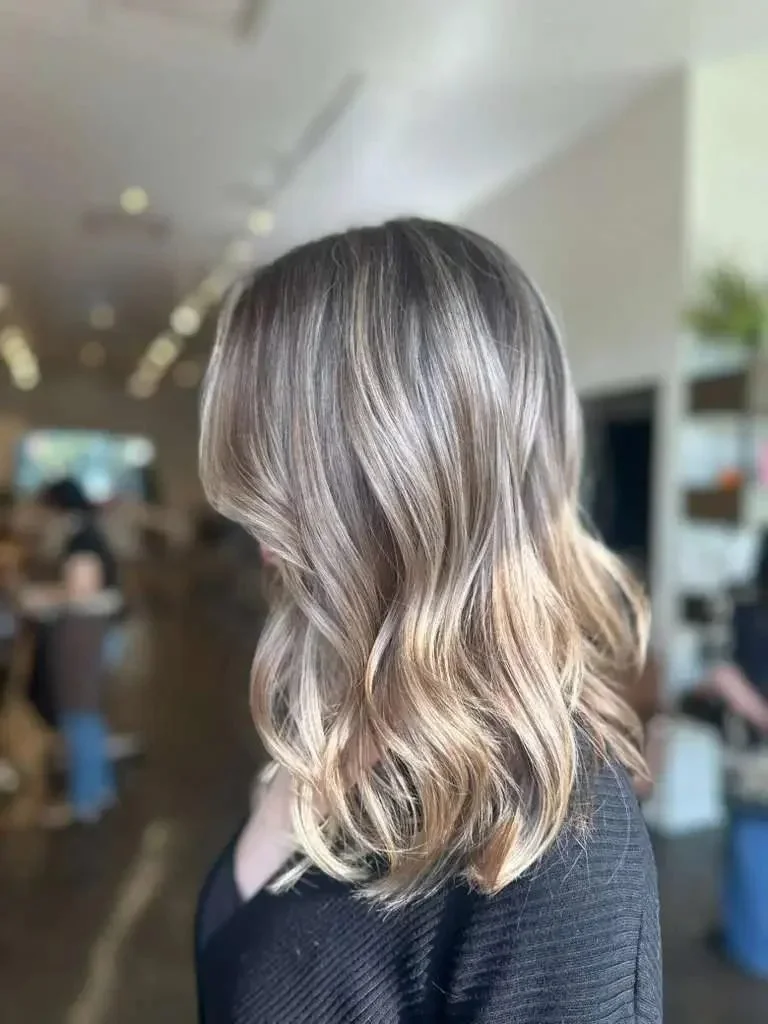
Dimensional blonde by Laura Pendergraft Granberry, a stylist at Clark & Company Salon
Freshly lightened hair often shows yellow, orange or brassy warmth. The toner sets the final shade: cooler, more neutral or warmer, depending on what you asked for. Because toners come in permanent, demi-permanent and semi-permanent formulas, "how long will my toner last?" has no single answer. Ask which kind your colorist is using.
Check whether the toner is already in your price. At Clark & Company, most stylists list toner as its own line, so it may be added to a highlight or balayage price. Jordin Fancher marks her starred lightening services as including "a toner and power dry," and Kaycee Clark's tint "includes gloss/color balance." Neither approach is a better deal by default, but it matters when you compare quotes between salons.
How long a gloss lasts, and how to make it last
There's no industry-wide number. The published figures belong to specific products or one salon's service:
- Wella rates its Shinefinity glaze at "up to 6 weeks."
- Wella rates Color Touch, its alkaline demi-permanent color, at "up to 24 washes."
- Rossi Park says its gloss treatments "last 4 to 8 weeks."
Wella's wash count is the more useful frame: the color wears down with shampooing, so how often you wash matters as much as the calendar. Three habits from the American Academy of Dermatology's hair-care guidance help:
- Apply shampoo to the scalp instead of the entire length of your hair.
- If your hair is dry or curly, condition the whole length.
- Keep the sun off it. The AAD warns that sun can leave hair "weak, dry, rough, faded and brittle," especially if you dye or bleach it, and recommends a wide-brimmed hat. In a Dallas summer, take that one seriously.
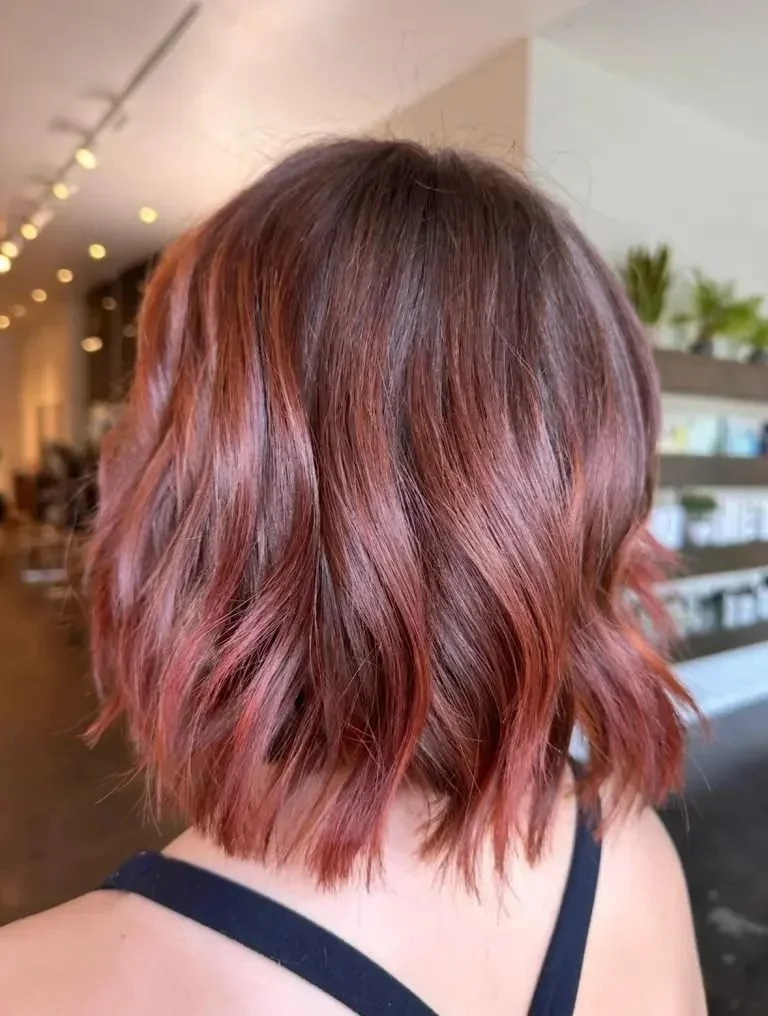
Red color by Laurel Rains, a stylist at Clark & Company Salon
When the shine has dulled or the tone has drifted back, it's time to book again. Your stylist can suggest an interval for your hair and wash routine.
Gloss on curly hair
"Is hair gloss damaging to curly hair?" is one of the questions Google shows for this topic. A no-lift gloss skips lightening, the step the AAD connects to more damage (it notes that going more than three shades lighter takes higher volumes of peroxide). "No lift" still doesn't tell you how your curls will respond, so book with a stylist who works with curly hair.
At Clark & Company, color for curls is its own service. Curly Color ($200+) is placed to your individual curl pattern, and we ask curly clients to arrive with clean, dry curls and to avoid heavy product or oils.
Gloss and toner at Clark & Company
Gloss & toner is its own service on our hair color menu, priced by stylist. Most stylists list it as "Toner"; Mercedes and Dustin list a combined gloss and toner price.
| Starting price | Stylist (service as listed) |
|---|---|
| $20+ | Tamie Kettle (Toner) |
| $50+ | Mercedes (Toner/Gloss) |
| $55+ | Alissa Capretti, Amy Rinaudo, Pryor McNairy (Toner) |
| $60+ | Jordin Fancher, Laurel Rains, Robin Northcutt (Toner) |
| $65+ | Kaycee Clark, Laura Pendergraft Granberry (Toner) |
| $70+ | Dustin (Gloss/Toner) |
Starting prices as published on each stylist's page in November 2026. The final price depends on hair length, density and the amount of color needed. Rebecca Elliott lists glossing among her healthy-hair services, including "how to keep it up at home," but doesn't publish a gloss price, so call the salon for hers.
Before you book:
- A blow dry is extra. Standalone color services at Clark & Company don't include one, so add a blowout if you want to leave styled.
- We ask for at least 24 hours' notice to cancel or reschedule. Later cancellations may be subject to a fee, and a valid card is required to reserve.
- Worth asking your stylist: is this a gloss or a toner, and what will it fix? Is the toner already in my lightening price? Is the formula permanent or demi-permanent? When should I come back?
Frequently asked questions
Does a hair gloss damage your hair?
Glosses sold as "zero lift" don't lighten hair, and lightening is the step the AAD connects to more damage. A gloss is still a color service, so the result depends on your hair and the product used.
Can a gloss fix brassy hair?
Often, yes. A demi-permanent gloss can neutralize brassiness, which is why some salons describe their gloss as reducing "dull and brassy tones." Right after lightening, that job is usually called toning and done in the same visit. Between appointments, a gloss can bring the tone back.
Is a gloss the same as a glaze?
The terms are used loosely. Wella sells its demi-permanent shine product as a "color glaze," while Behind the Chair's guide to gloss, glaze and toner says the three are "not the same." Ask your stylist which product they use and whether it has tone in it.
Can a gloss cover gray hair?
Not fully. A gloss can soften the first grays. For full coverage, book a tint.
Book a gloss or toner in Dallas
Clark & Company Salon is at 1130 Dragon Street, Suite 170, in the Dallas Design District. Pick a stylist from the table above, or browse our stylists; each stylist's page lists their prices and how to book. Not sure whether you need a gloss, a toner or full color? Call us at (214) 242-9250 and we'll help you choose the right appointment. Every color service is on our hair color page.